

Outdoor Teak Table TLC: Top Finishes and Sealers for Lasting Wood Protection
Why Protecting Your Outdoor Wood Table Matters
The best protection for outdoor wood table surfaces includes penetrating oils, film-forming sealants, and wood stains. Your choice depends on your wood type, climate, and desired appearance.
Quick Answer:
- For Teak/Hardwoods: Penetrating oils (reapply every 1-2 years)
- For Maximum Durability: Oil-based sealants (last 3-5 years)
- For Color + Protection: Semi-transparent or solid stains
- For Easy Maintenance: Water-based sealants
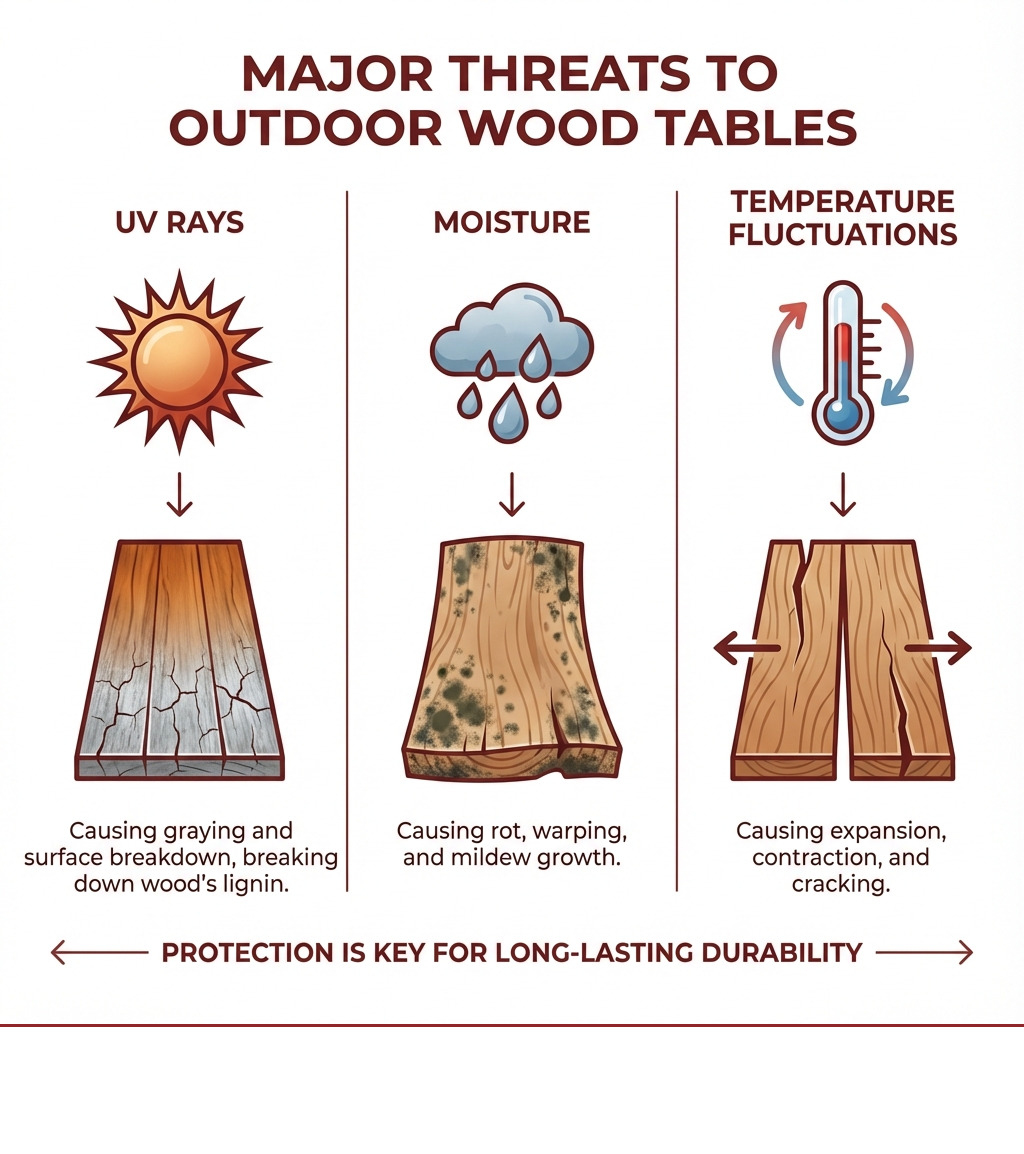
Without proper protection, your outdoor dining table is fighting a losing battle. Sun, moisture, and temperature swings can slash its lifespan by up to 50%. That silvery-gray patina isn’t just cosmetic—it’s a sign that UV radiation is breaking down the wood’s lignin, the natural glue holding its fibers together.
Applying the right wood protector can extend your table’s life by 5-10 years. Products with UV inhibitors can reduce surface degradation by up to 70%, while water repellents prevent the expansion and contraction cycles that lead to splitting and warping.
The three main protection categories are:
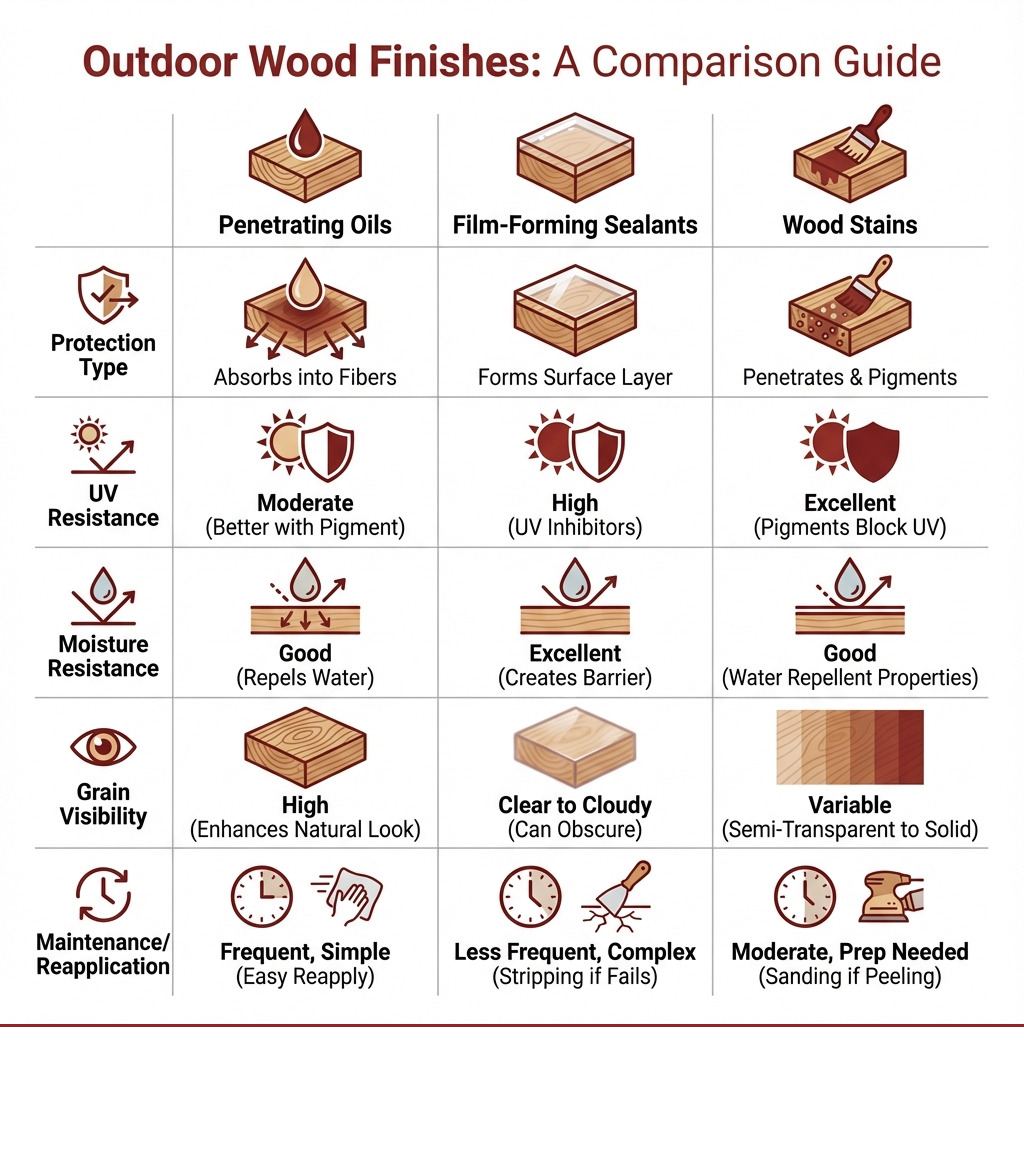
- Penetrating Oils – Soak into wood, easy to reapply, natural look
- Film-Forming Sealants – Create a surface barrier, longer-lasting
- Wood Stains – Add color while blocking UV rays
In Southern California, where intense sun meets coastal moisture, choosing the right protection is essential. With the right knowledge, protecting your outdoor wood table is straightforward and highly effective.
I’m Drew Isaacman, and with over 24 years of experience restoring outdoor wood in Southern California, I know that the best protection for outdoor wood table surfaces starts with matching the right product to your specific needs. This guide will walk you through that choice confidently.
Understanding Your Options: Sealants, Oils, and Stains
Safeguarding your outdoor wood table means choosing between three main types of protectors: penetrating oils, film-forming sealants, and wood stains. Understanding how they work is key to selecting the best protection for outdoor wood table surfaces, preserving both looks and structural integrity in the demanding Southern California climate.
Penetrating Oils: For a Natural Look
Penetrating oils like tung oil and boiled linseed oil soak into wood fibers to replenish natural oils, protecting from the inside out. This provides a rich, natural finish that improves the wood’s grain without forming a surface film. By saturating the wood, they make it less susceptible to moisture absorption, which helps prevent cracking and warping.
Pros:
- Natural Aesthetic: Maintains the wood’s natural feel and appearance.
- Easy Reapplication: Requires only cleaning and a fresh coat, with no heavy stripping or sanding. Over 60% of consumers prioritize this ease of application.
- Good for Dense Woods: Ideal for dense hardwoods like teak, mahogany, and ipe. Learn more in our guide to Teak Oil for Outdoor Furniture.
Cons:
- Frequent Reapplication: Needs reapplication more often than sealants, typically every 6-12 months.
- Less UV Protection: Offers less UV protection than pigmented stains or sealants with UV inhibitors.
Film-Forming Sealants: A Protective Barrier
Film-forming sealants create a durable layer on the wood’s surface, forming a robust barrier against moisture, UV rays, and wear. They seal the wood’s pores to prevent water and dirt penetration. Many modern sealants also include UV inhibitors to block the sun’s harmful rays.
Types and Performance:
- Oil-Based Sealants: Offer superior durability, lasting 3-5 years. They penetrate deeper than water-based options, enhancing the grain and water resistance. Spar urethane is a popular example, forming a clear barrier against UV rays, rain, and temperature changes.
- Water-Based Sealants: Less durable (lasting 1-2 years) but offer quicker drying times, lower VOCs, and easier cleanup. They also resist yellowing over time.
Pros:
- High Durability: Forms a tough surface that withstands abrasion.
- Excellent Water Repellency: Creates a waterproof barrier.
- Strong UV Protection: Many contain UV inhibitors to reduce sun damage.
- Longer Lifespan: Oil-based options can last several years.
Cons:
- Complex Reapplication: When they fail, they can crack or peel, requiring stripping the old finish before reapplication.
- Can Obscure Grain: Can create a more artificial, plastic-like look compared to oils.
For more insights, check out our guide on Waterproofing Outdoor Furniture.
Wood Stains: Color and Protection Combined
Wood stains provide both color and protection. Unlike paint, they penetrate the wood, allowing the grain to show through to varying degrees. The pigments in stains are excellent at blocking damaging UV rays—a critical feature in sunny Southern California. Stains also contain binders and water repellents to protect from moisture.
Types of Stains:
- Semi-Transparent Stains: Add a subtle tint while allowing the natural grain to remain visible. They offer good UV protection.
- Solid Stains: Provide an opaque, paint-like finish that completely covers the wood grain. They offer the maximum level of UV protection and durability.
Pros:
- Excellent UV Protection: Pigments are natural UV blockers, reducing sun degradation by up to 70%.
- Aesthetic Versatility: A wide range of colors is available to match your decor.
- Moisture Resistance: Typically include water-repellent properties.
Cons:
- Can Obscure Grain: Solid stains will hide the natural beauty of the wood.
- Reapplication Can Be Tricky: If a stain peels or flakes, it may require sanding or stripping before reapplication.
How to Choose the Best Protection for Your Outdoor Wood Table
Choosing the right finish isn’t a one-size-fits-all decision. By considering your wood type, climate, and desired look, you can confidently select the best protection for outdoor wood table surfaces for your Southern California home.
Key Factors for Choosing a Wood Protector
When selecting a wood protector, consider these three primary factors:
- Wood Type: This is the most important factor. Woods differ in density, grain, and natural resistance.
- Naturally Resistant Woods: For teak, redwood, and cedar, penetrating oils or clear sealants improve their natural beauty and resistance. Even these woods need sealing to prevent sun and rain damage. Our Teak Furniture Care services highlight this.
- Less Resistant Woods: For pine or fir, a more robust film-forming sealant or a solid stain is necessary for adequate protection.
-
Climate Considerations: Southern California’s intense sun, coastal moisture, and salt air pose unique challenges.
- UV Exposure: For tables in direct sun, UV protection is paramount. Stains with pigments and sealants with UV inhibitors are essential to prevent graying and degradation.
- Moisture Levels: High humidity requires excellent water repellency to prevent mold, mildew, and warping. Look for products that cause water to bead on the surface.
- Salt Air: Coastal areas demand tougher products that can withstand corrosive salt particles.
-
Desired Finish and Maintenance Level: Consider the look you want and the upkeep you’re willing to perform.
- Natural Look: To showcase the wood’s grain, use penetrating oils or clear/semi-transparent sealants.
- Color Change: To add color, wood stains offer a wide palette while providing protection.
- Maintenance Commitment: Penetrating oils require more frequent attention (annually) but are easier to reapply. Film-forming sealants and stains last longer (2-5 years) but may require more prep work when refreshing.
Decoding Performance: Water Repellency vs. UV Protection
The best protection for outdoor wood table must excel at repelling water and blocking UV radiation.
Water Repellency:
Moisture causes wood to swell and contract, leading to cracks, splits, and warping. Damp conditions also encourage mold, mildew, and rot. A good water repellent forms a barrier that causes water to bead on the surface rather than soaking in. Products like Thompson’s WaterSeal are designed for this, though their sun protection can be less robust for furniture.
UV Protection:
The Southern California sun is brutal on wood. UV radiation breaks down lignin (the wood’s natural glue), causing it to turn gray, fade, and become brittle.
- What to look for: Products with UV inhibitors are crucial, as they can reduce sun degradation by up to 70%.
- The Power of Pigments: Pigments in wood stains are excellent natural UV blockers. The more opaque the stain (like a solid stain), the better its UV protection. Clear sealers often lack pigments and allow wood to gray more rapidly.
The Benefits of Eco-Friendly and Non-Toxic Options
Growing awareness of health and environmental impacts has increased demand for non-toxic, eco-friendly wood protectors.
Why choose eco-friendly?
- Health and Safety: Low-VOC or no-VOC options reduce airborne toxins, making your patio safer for family and pets.
- Environmental Impact: Eco-friendly finishes often use sustainable, plant-based ingredients with less impact on your garden and local ecosystem.
- Peace of Mind: Using a product that performs well without harming your loved ones or the planet offers great peace of mind.
What to look for:
- Water-Based Formulas: Many modern water-based sealants are formulated with low VOCs.
- Natural, Plant-Based Oils: Oils like tung oil and linseed oil are derived from natural sources. Some products like Cedarcide Cedarshield are marketed as non-toxic and eco-friendly.
Your Step-by-Step Guide to Application
Choosing the best protection for outdoor wood table is only half the battle; proper preparation and application are just as important. Following these steps will ensure a beautiful, long-lasting finish that protects your investment.
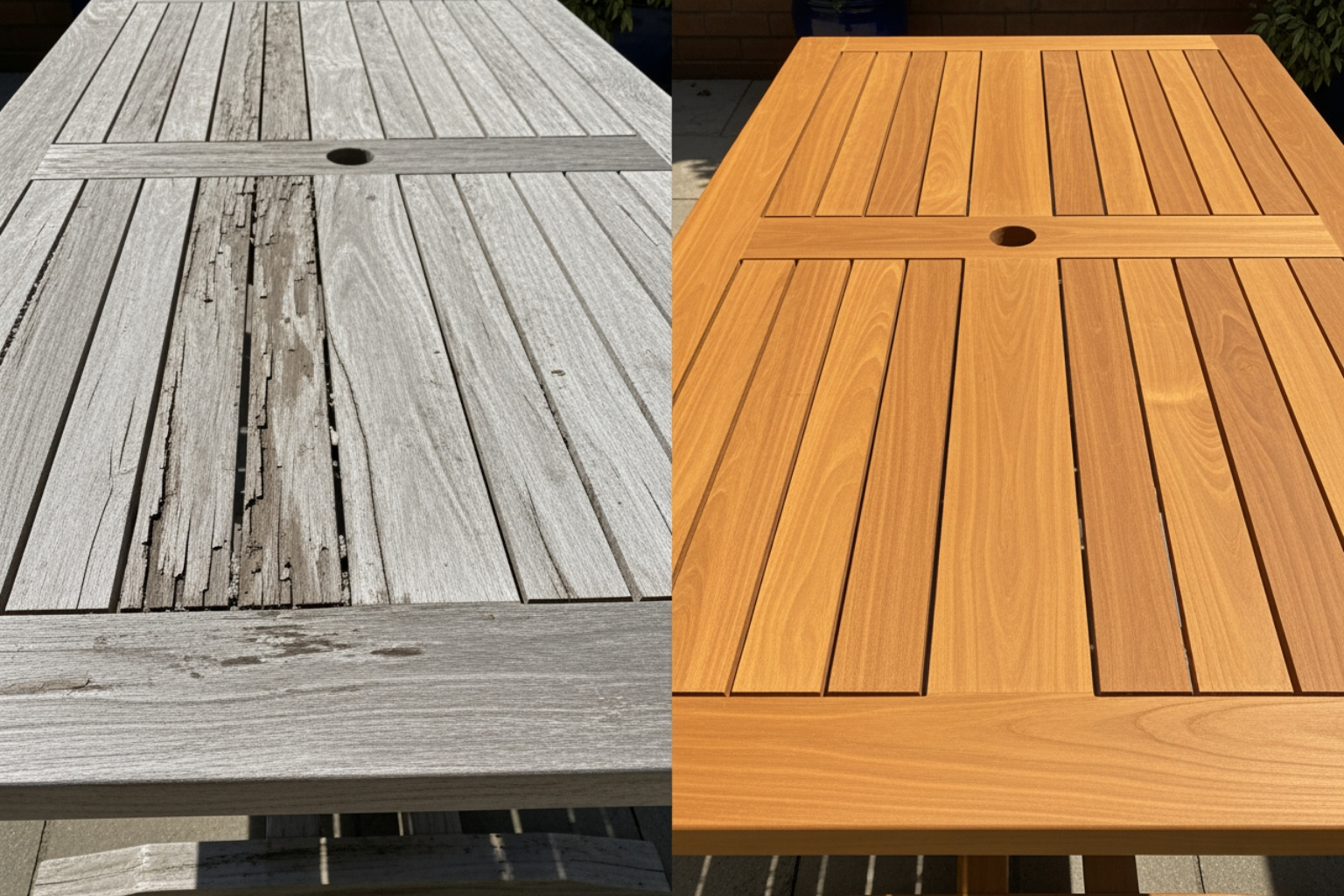
Step 1: Recognizing the Signs of Distress
Before applying a new finish, assess your table’s condition. Unprotected wood’s lifespan can be shortened by up to 50% from moisture and UV damage, so regular inspection is key.
Look for these signs that your table needs attention:
- Graying and Fading: A dull, washed-out, or silvery-gray appearance indicates UV damage and finish failure, a common issue in Southern California.
- Cracks and Splits: Small cracks caused by the wood’s expansion and contraction from moisture.
- Rough or Splintered Surface: Degrading wood fibers will feel rough to the touch.
- Mold and Mildew: Black spots or green patches indicate trapped moisture.
- Peeling or Flaking Finish: A sign that a previous film-forming finish has failed and must be removed.
- Water Soaks In: Sprinkle water on the table. If it soaks in instead of beading, it’s time to reapply protection.
Timely intervention can prevent minor issues from becoming major restoration projects. For more, visit our Maintaining Outdoor Teak Furniture guide.
Step 2: The Crucial Preparation Process
Proper preparation is the most important step for a lasting finish. Rushing this step will compromise any protector.
-
Clean Thoroughly: Remove all loose dirt, debris, mold, and mildew. We recommend an oxygen bleach solution for most woods (or oxalic acid for redwood). After cleaning, rinse thoroughly and let the table dry completely for 24-48 hours.
- Crucial tip: Never use a pressure washer. It damages wood by eroding the soft grain, leaving a rough surface.
-
Sand the Surface: Once dry, sand the table to remove old residue, smooth the grain, and open the wood’s pores for better adhesion. We recommend starting with 80-grit sandpaper and working up to 220-grit for a smooth finish. Wipe away all sanding dust with a tack cloth before proceeding.
Proper preparation ensures your chosen protector works as intended. Our team offers expert Teak Refinishing for those who prefer a professional touch.
Step 3: Application and Maintenance for the Best Protection for Your Outdoor Wood Table
With your table clean and prepped, it’s time to apply your chosen protector.
Application Tips:
- Read the Label: Always follow the manufacturer’s instructions for application, coats, and drying times.
- Apply Evenly: Use a quality brush or rag, working in the direction of the wood grain.
- Work in the Shade: Avoid direct sunlight, which can cause the finish to dry too quickly and streak.
- Multiple Coats: Apply multiple thin coats rather than one thick one for a better result.
Maintenance and Reapplication:
All outdoor finishes require maintenance. Longevity depends on the product, climate, and wear.
- Penetrating Oils: Reapply every 1-2 years (or 6-12 months in harsh sun). Reapplication is simple: clean and apply a fresh coat.
- Film-Forming Sealants (Oil-Based): Last 3-5 years. May require sanding or stripping before reapplication.
- Film-Forming Sealants (Water-Based): Last 1-2 years and require prep for reapplication.
- Wood Stains: Last 2-3 years before needing a refresh.
How to Know When to Reapply:
- The Water Test: If water soaks in instead of beading, it’s time for a fresh coat.
- Visual Cues: Fading color, dullness, or graying are also strong indicators.
Regular maintenance can extend your furniture’s life by 5-10 years. If you need assistance, we offer comprehensive Maintenance Services.
Frequently Asked Questions about Protecting Outdoor Wood
Here are answers to common questions we hear from Southern California clients about the best protection for outdoor wood table surfaces.
Can I use an indoor wood finish on my outdoor table?
No. Indoor finishes like standard polyurethane lack the UV inhibitors and flexibility needed for outdoor conditions. They cannot handle the expansion and contraction from temperature and moisture changes. An indoor finish will quickly yellow, crack, and peel outdoors, leaving the wood vulnerable. Always use products specifically labeled for outdoor use.
What is the easiest type of wood protector to maintain?
Penetrating oils are the easiest to maintain, though they need more frequent reapplication. Because they soak into the wood, refreshing the finish only requires cleaning and applying a new coat—no heavy stripping or sanding is needed. This is unlike film-forming sealants that can peel and require more prep work.
How do I know when it’s time to reapply the protector?
The most reliable method is the “water bead test.” Sprinkle a few drops of water on your table’s surface.
- If the water beads up: The protective finish is still working.
- If the water soaks in and darkens the wood: The finish has worn down. It’s time to clean the table and reapply a fresh coat.
Other visual cues include fading color, a dull appearance, or the return of graying. Reapply proactively to prevent more serious damage.
Conclusion: Preserve Your Investment for Years to Come
Your outdoor wood table is a focal point for memories. Protecting this investment against Southern California’s sun and moisture is key to its beauty and function. While unprotected wood’s lifespan can be cut by 50%, choosing the best protection for outdoor wood table surfaces and applying it correctly can extend its life by 5-10 years.
We hope this guide has empowered you to maintain your table with confidence. For homeowners in Southern California, from San Diego to Orange County and Los Angeles, who want a flawless, professional-grade finish without the DIY hassle, the experts at Teak & Deck Professionals are here to help. We specialize in combating sun, salt, and moisture damage, bringing back the natural beauty to outdoor spaces throughout our communities including Carlsbad, Huntington Beach, and Newport Beach.