


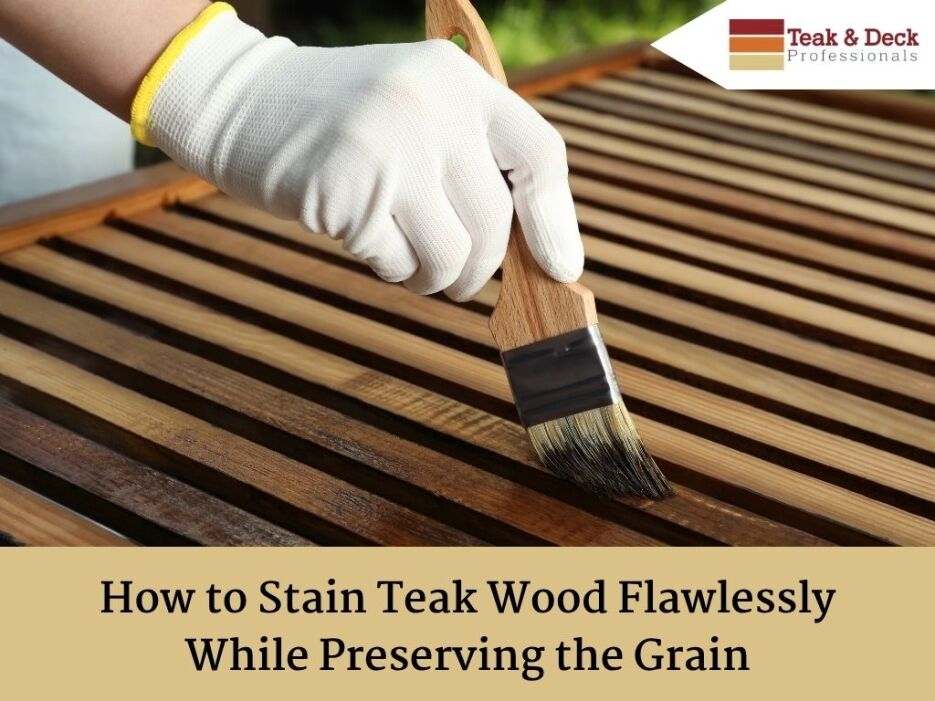
How to Stain Teak Wood Flawlessly While Preserving the Grain
Teak is one of the most sought-after woods for outdoor furniture and structures, and for good reason. It weathers beautifully, holds up through years of sun and rain, and ages in a way that other woods simply don’t.
But when that aging tips from character into neglect, most homeowners reach for a stain.
Whether that’s the right move depends on understanding how teak actually behaves — and that starts with one question: can teak wood even be stained?
At Teak & Deck Professionals, we’ve helped homeowners across San Diego, Orange County, and Los Angeles answer that question for over 24 years. This guide shares what we know, in plain and practical terms.
Can You Stain Teak Wood?
The short answer is yes. The longer answer is that teak’s natural oil content makes it one of the more demanding woods to stain correctly, and skipping over that detail is where most projects go wrong.
Teak produces natural oils within its grain that act as a built-in defense against moisture, insects, and rot. Those same oils create a barrier that resists stain absorption. When stain meets an oily, unprepared surface, it sits on top rather than penetrating the wood. The result is color that looks uneven, lifts prematurely, or fades within a single season.
There’s also the matter of timing. Fresh teak and weathered teak behave differently. New teak tends to have higher oil content near the surface, making it even more resistant to stain uptake.
Weathered teak, the kind that has turned that familiar silvery-gray, has had its surface oils depleted by sun and rain exposure. Both conditions require different starting points before any stain touches the wood.
What staining does when the prep is right is worth the effort. A properly stained teak surface recovers its natural golden-brown warmth, the grain comes through clearly, and the finish adds a protective layer that slows future weathering.
The catch is that getting the prep right is where most DIY attempts run into trouble — and on teak, the margin for error is smaller than most people expect.
What Staining Actually Buys You
Three things, in order of how much they matter.
It slows UV fading. Sun, rain, wind, and airborne dirt pull the golden tone toward gray. Pollen and pollution settle into the open grain and speed that up, particularly on horizontal surfaces like tabletops and deck boards.
It gives you control over color. Stain brings faded wood back toward its original golden-brown, or shifts it to match the rest of the space. Go lighter on anything sitting in full sun — dark pigment absorbs more heat, and a bench nobody can sit on in July is a bad outcome.
It slows moisture cycling. Stain absorbs into the grain and keeps the wood from drying out as fast between wet and dry spells.
The gray is better read as a warning than a look. It means surface oils have evaporated, and wood that has lost its oils is less water-resistant and weaker than it was. Staining a piece that is starting to fade is a far smaller job than restoring one that has been gray for three summers.
What You Need to Know Before Staining Teak
Not all wood stains work on teak, and reaching for a generic product from the hardware store is one of the most common ways this process goes sideways. Teak requires a stain formulated specifically for high-oil hardwoods. A product designed for pine or cedar will behave unpredictably on a dense, oil-rich surface.
Staining and Sealing Are the Same Step
A quality teak stain is an all-in-one product that delivers color and protection in a single application. There’s no separate sealing stage after the stain dries. Any product that markets staining and sealing as two separate steps is the wrong product for teak.
Oil-based formulations generally outlast water-based ones on teak. Water-based products are easier to apply and clean up, but oil-based stains penetrate more deeply into dense hardwood grain and hold their color longer under outdoor conditions.

The Condition of Your Teak Changes Where You Start
The wood’s current state determines how much prep work comes before staining. Each condition requires a different starting point:
- New teak has high surface oil content and resists stain absorption more than weathered wood
- Weathered or grayed teak has lost its surface oils to sun and rain exposure and needs the oxidized layer removed before staining
- Previously finished teak carries old oil, stain, or sealant that interferes with new stain absorption and needs to be stripped completely
Indoor vs. Outdoor Formulations
Indoor teak furniture and outdoor teak structures call for different products. Outdoor formulations are built to handle UV exposure and moisture. An indoor stain on a patio set will break down far sooner than it should.
How to Stain Teak Wood
Done right, staining teak is a methodical process. Here’s what each stage involves.

Step 1: Clean the Surface
Start with a thorough cleaning to remove dirt, mildew, and debris. A soft-bristle brush with a mild soap solution works for most surfaces. Rinse thoroughly and allow the wood to dry completely before proceeding.
Step 2: Sand After the Wood Has Dried
Once the surface is fully dry, sanding comes next. Begin with 120-grit sandpaper on any rough or uneven spots, then follow with 220-grit across the entire surface.
Always sand along the grain. Cross-grain sanding leaves scratches that the stain will pick up and highlight. Wipe off any residue with a dry cloth before moving to the next step.
Step 3: Apply the Stain-Sealer
Apply the product evenly using a brush, foam pad, or clean cloth depending on the manufacturer’s instructions. Wipe off any excess before it pools on the surface. For a deeper color, additional coats can be added once each layer has dried completely.
Step 4: Inspect Once Dry
After the final coat dries, go over the surface carefully. Look for uneven coverage or missed spots. A light buff with a soft cloth brings out the finish and smooths any minor inconsistencies.
What Can Go Wrong
Teak is unforgiving when the process is rushed or the wrong product is used. Most staining mistakes fall into a handful of patterns, and none of them are obvious until the finish is already dry.
- Staining over wet wood: Moisture trapped beneath the surface prevents proper absorption and causes the finish to lift or peel prematurely
- Skipping or shortening the sanding step: The grain stays closed, the stain sits on top rather than penetrating, and the color fades or flakes within months
- Using a generic stain: Pigment absorbs at different rates across teak’s dense grain, producing blotchy results that additional coats won’t fix
- Applying stain over an existing finish: The old and new products don’t bond, and the finish deteriorates from underneath
The harder reality is that most of these mistakes are difficult to reverse. Fixing a bad stain job means stripping the wood completely and starting over, which costs more in time and money than getting the process right the first time.
DIY vs. Professional Teak Staining: Which Makes Sense?
Staining teak yourself is possible under the right conditions. A small piece of newer furniture in good shape, with no existing finish and minimal weathering, sits within reach for a careful homeowner with the right product and enough time to do the prep properly.
Larger surfaces, heavily weathered teak, or wood with an existing finish are a different story. The prep work alone becomes significantly more involved, and the consequences of getting it wrong scale with the size of the project.
A few situations where professional restoration makes more sense:
- Decks, pergolas, or large furniture sets where uneven application is difficult to avoid across a wide surface
- Teak that has been previously stained, oiled, or sealed and needs complete stripping before refinishing
- Severely weathered or grayed wood that requires more than basic sanding to restore
- Projects where the result needs to last and redoing the work in a year is not an option
Teak & Deck Professionals work exclusively with teak and premium hardwoods. That specialization covers the full process, from assessing the wood’s condition to selecting the right product to application, so the finish holds the way it should.
Maintaining Stained Teak After the Job Is Done
A good stain job on teak lasts longer with basic upkeep. The finish performs well on its own, but regular attention keeps deterioration from building up between restoration cycles.
1. Clean Regularly
A soft brush with mild soap and water handles most surface dirt and prevents buildup from settling into the grain. Harsh chemicals and abrasive cleaners break down the finish faster than weathering does.
2. Address Standing Water Promptly
Pooled water left on the surface long enough will work its way into the finish. Wipe spills and standing water off as they happen.
3. Protect From Prolonged Exposure
Furniture covers or moving pieces to a shaded area during harsh weather extend the life of the finish considerably.
4. Inspect Periodically
Look for areas where the finish is thinning, fading, or showing discoloration. Catching wear early means a lighter touch is needed to restore it.
5. Reapply When the Finish Starts to Wear
Follow the product manufacturer’s guidance on reapplication intervals. Waiting until the wood is fully exposed means starting the prep process over again rather than applying a maintenance coat.
When wear goes beyond what a maintenance coat can address, sanding and refinishing bring the wood back. At that point, the full restoration process applies.
Leave Your Teak in the Right Hands. Call Teak & Deck Professionals Today!
Good teak staining comes down to preparation, the right product, and patience with the process. Cut corners on any one of those, and the finish reflects it.
Reach out to Teak & Deck Professionals today for an assessment and see what your teak is capable of.
Published on: Dec 10, 2020
Updated: June 15, 2026
